Key Terms & General Information
As you start looking to get Flood Zone help, you may see a lot of acronyms and new terminology. Below are some standard definitions to help clarify what you see.
To learn more about flood maps, you can reference this instructional from FEMA or review their website for more information.
NFIP (National Flood Insurance Program)
A program managed by FEMA that provides flood insurance to property owners, renters, and businesses and encourages communities to adopt and enforce floodplain management regulations based on flood zone analysis.
Flood Certificate (Flood Zone Determination or Flood Hazard Determination): Official document certifying if a property or structure is located in a Special Flood Hazard Area as based on FEMA flood maps. A Flood Certificate is required by lenders to see if FEMA insurance is required for NFIP compliance.
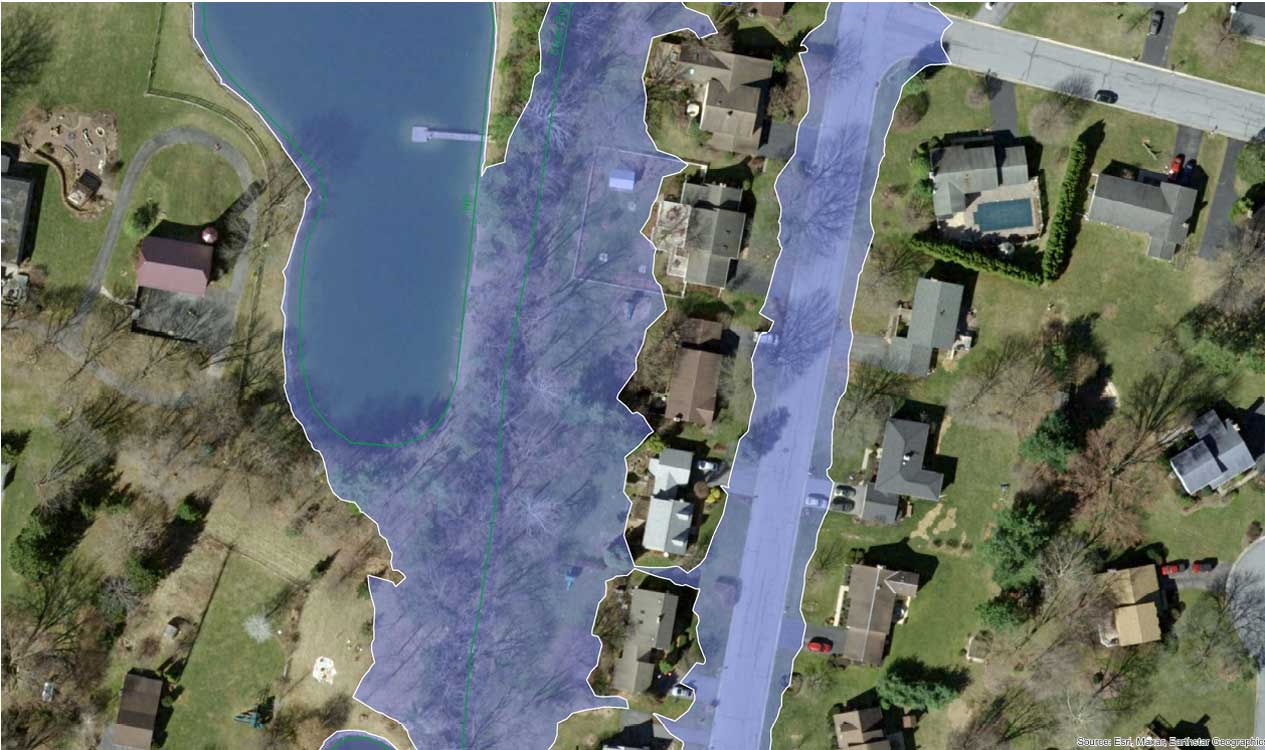
Flood Insurance Rate Map (FIRM, or flood map) is the official map of a community on which defines both the special flood hazard areas and the flood zones applicable to the community. This map is used by the National Flood Insurance Program (NFIP) for floodplain management, mitigation, and insurance purposes. The flood map is the official source for flood risk assessment within a community.
Commonly depicted on flood maps:
- Flood Zone Designations
- Base Flood Elevations (BFE)
- Floodplain Boundaries
- Roads and Landmarks
Flood Zone Designations (FEMA/FIRM)
Flood Zone Designations are geographic areas as having different levels of flood risk. Each zone is represented differently on the flood map to convey low, moderate, and high-risk flood zones.
Special Flood Hazard Areas (SFHAs): High-risk areas shown on the flood map as shaded zones beginning with the letters A or V.
- SFHA are defined as the land area covered by floodwaters during a 100-year event.
- In communities that participate in the NFIP, all home and business owners with structures in high-risk areas who hold mortgages from federally regulated or insured lenders are required to buy flood insurance and adhere to floodplain management regulations.
Non-Special Flood Hazard Areas: Moderate- to low-risk areas shown on the flood map as zones beginning with the letters B, C, or X (including shaded & unshaded).
- The risk of flooding is lower, but risk still exists In communities that participate in the NFIP, flood insurance is available, but not mandatory, for all property owners and renters in these zones typically at a lower rate.
- Some flood maps also include areas where there are possible, but undetermined, flood hazards or unstudied areas. These areas are shown on flood maps as “Zone D.”
High-Risk Flood Zones (Special Flood Hazard Areas – SFHAs)
- Zone A: No base flood elevations (BFEs) provided. Subject to inundation by the 1% annual chance flood.
- Zone AE: BFEs provided. Replaces Zones A1–A30 on newer maps.
- Zones A1–A30: Older designations for areas with BFEs. Replaced by AE zones.
- Zone AO: Shallow flooding (sheet flow) with depths from 1 to 3 feet; average depths shown.
- Zone AH: Shallow ponding flood hazard areas with BFEs.
- Zone AR: Areas protected by flood control structures being restored or improved.
- Zone A99: 1% annual chance flood risk, with federal protection systems under construction.
- Zone V: Coastal areas with 1% flood risk and wave hazards; no BFEs.
- Zone VE: Coastal high-hazard areas with wave action and BFEs.
Moderate to Low Risk Zones
- Zone X (Shaded): 0.2% annual chance flood hazard (500-year floodplain) or areas protected by levees.
- Zone X (Unshaded): Minimal risk areas outside the 500-year floodplain.
- Zone B: Old designation equivalent to shaded Zone X.
- Zone C: Old designation equivalent to unshaded Zone X.
- Zone D: Undetermined flood hazard where studies haven’t been conducted.
Map Revision Processes & FEMA Letters
- LOMA (Letter of Map Amendment): Official amendment made to an effective flood map, removing a property from the SFHA based on elevation.
- Letter of Map Change (LOMC): A document issued by FEMA that revises or amends the flood hazard information shown on the flood map. Types of LOMCs include Letters of Map Revision (LOMRs), Letters of Map Revision Based on Fill (LOMR-Fs), and Letters of Map Amendment (LOMAs).
- LOMR: Letter of Map Revision – officially revises flood hazard info on a FIRM.
- CLOMR: Conditional Letter of Map Revision – FEMA’s comment on a proposed project.
- CLOMA: Conditional Letter of Map Amendment – indicates a proposed structure would not be in the SFHA.
- MT-1 Application: Used for LOMA, LOMR-F, CLOMA requests.
- MT-2 Application: Used for LOMR/CLOMR requests for large area changes.
Other Key NFIP Terms
- FIS: Flood Insurance Study – technical flood data accompanying FIRMs.
- Elevation Survey / Elevation Certificate: documents a property’s elevation in relation to the Base Flood Elevation.
- Base Flood Elevation (BFE): Critical measurement used in flood risk management that calculates the elevation floodwater is expected to rise to during a base flood (a flood that is anticipated to occur once in 100 years, or 1% annual chance).
- DFIRM: Digital Flood Insurance Rate Map – digital version of a FIRM.
- Floodway: Channel and adjacent land required to carry the base flood without increasing elevations.
- Freeboard: Safety margin (typically 1–3 ft) above the BFE.
- Elevated Building: Structure raised above ground to reduce flood risk.
- Lowest Floor: Lowest enclosed floor including basement, used for insurance rating.
- Community Rating System (CRS): Incentive program that rewards floodplain management with premium discounts.